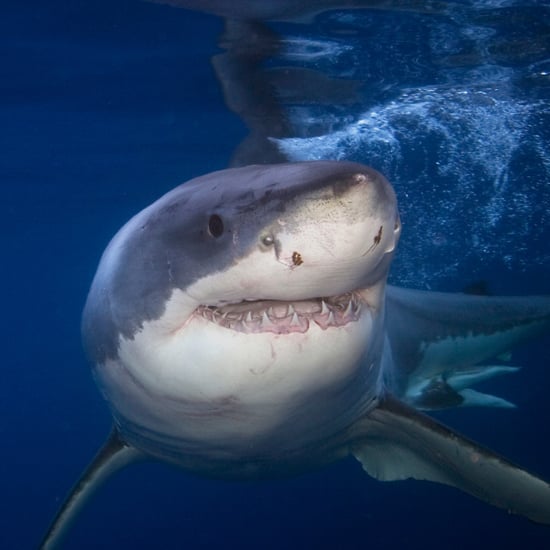
Every summer, Shark Week gives us a closer look at one of the ocean’s most misunderstood creatures.
Sharks are often portrayed as dangerous and disruptive. In reality, they play an important role in maintaining balance within marine ecosystems. They are highly adaptive, sensitive to changes in their environment, and essential to the health of the systems around them.
That got one of our team members thinking.
Jordan Visser of our client services team recently created a fun internal presentation comparing sharks and HR professionals. The parallels were surprisingly strong, and they point to a few important lessons for organizational leaders.
Small Signals Can Reveal Bigger Problems
Sharks can detect subtle changes in their surroundings before those changes become obvious.
Strong HR teams do something similar.
They notice patterns early. A manager is struggling to address performance concerns. Hiring is taking longer than it should. Employee questions are becoming more frequent. Turnover is beginning to cluster within one department.
None of these issues may feel urgent on their own.
But experienced HR professionals know when a small signal may be pointing to a larger problem. They ask questions, look for patterns, and help leaders respond before the situation becomes more disruptive.
That kind of early detection is one of the most valuable contributions HR can make because preventing problems is almost always easier than solving them.
Healthy Organizations Keep Adapting
Sharks have survived for hundreds of millions of years because they adapt.
Organizations need to do the same.
Workforces change. Laws evolve. Technology reshapes roles. Employee expectations shift. The processes that worked five years ago may no longer support the organization you have today.
Strong HR is not a static set of policies. It is an ongoing effort to make sure hiring, performance management, compensation, compliance, benefits, and employee support continue to match the organization’s needs.
The goal is not constant change for its own sake.
It is a thoughtful evolution.
The strongest organizations regularly ask:
- Are our people processes still working?
- Are managers equipped for what is expected of them?
- Are our policies keeping pace with the way we operate?
- Are we preparing for what comes next?
Balance Matters
Sharks help maintain balance within marine ecosystems.
HR plays a similar role within organizations.
At its best, HR is not there to take one side. It is there to help create an environment where the organization can succeed and employees can do their best work.
That means setting clear expectations. Supporting managers. Addressing concerns consistently. Protecting the organization from unnecessary risk. Helping employees understand what is expected of them and where to go for support.
When those systems are working well, the organization feels more stable.
Leaders spend less time managing recurring people problems. Managers make better decisions. Employees have greater clarity. The business or mission can move forward with fewer distractions.
HR is Misunderstood Too
Sharks have a reputation problem.
HR sometimes does, too.
It can be seen as paperwork, policies, or the department that steps in when something has already gone wrong.
But great HR is much broader than that.
It helps organizations adapt. It detects problems early. It creates structure and balance. And, much like sharks in the ocean, its greatest impact is often felt in the health of the overall system.
So, during Shark Week, we are giving sharks and HR the credit they deserve.
Both are more valuable, more complex, and far more important than their reputations suggest.
If you're curious how HR can help your organization adapt and thrive, let's have a conversation.